
Outdoor Spaces Built for Long-Term Use
Deck Building in Miller Place for expanding usable outdoor areas with durable, weather-resistant structures
Suffolk County's coastal environment—salt air, high humidity, and temperature swings—accelerates wood decay and hardware corrosion, making material selection critical for deck longevity. Custom deck construction from BG Home Renovations uses durable materials suited for long-term outdoor exposure, with designs tailored to fit your home's layout and style while accounting for ground slope, sun orientation, and how you plan to use the space. Homeowners need this service when existing decks show rot in support posts, when sagging joists indicate structural failure, or when planning to create functional outdoor living areas that expand entertaining and recreation space beyond the home's interior footprint.
Deck building begins with evaluating soil conditions and drainage patterns to ensure footings are properly sized and positioned to prevent settling, then framing is constructed with corrosion-resistant fasteners and joist spacing calculated for the decking material being installed. The design process accounts for how the deck integrates with existing doors, stairs, and landscaping, ensuring that transitions are smooth and that the finished structure enhances rather than disrupts the property's overall appearance.
Schedule a site evaluation to discuss layout options, material choices, and whether features like pergolas, built-in seating, or outdoor bars fit your intended use and budget.
Why Material Selection Works for Coastal Conditions
Deck durability depends on choosing materials that resist moisture absorption and UV degradation, which vary significantly in performance and maintenance requirements. Pressure-treated lumber remains the most cost-effective framing material but requires regular sealing to prevent splitting and warping, while composite decking eliminates the need for staining and resists fading better than wood under sustained sun exposure common in open backyard settings. Hardware—joist hangers, lag bolts, and flashing—must be galvanized or stainless steel to prevent rust that weakens connections and stains decking surfaces.
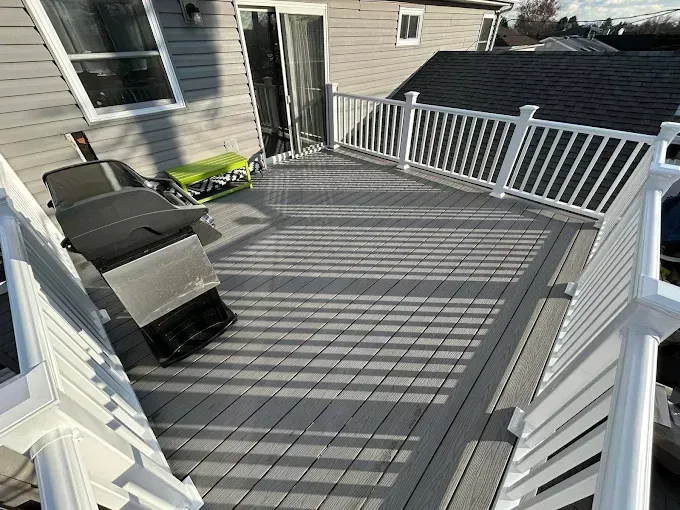
Once construction is complete, you'll notice a level, stable surface that doesn't bounce or flex underfoot, indicating proper joist spacing and support, along with smooth transitions from door thresholds to deck height and from deck edges to stairs or ground level. Railings are secured to meet code requirements for height and spacing, providing safety without obstructing sightlines to yard features or water views.
Decks can be integrated with pergolas for shade, gazebos for enclosed seating areas, or outdoor bars for entertaining, with each addition planned during initial design to ensure structural support and material compatibility. The construction process doesn't include landscaping or hardscaping, but footings and drainage are coordinated to prevent water pooling under the deck or erosion around support posts.
Building a deck involves decisions about materials, design features, and how the structure will hold up under coastal weather conditions. These answers address common questions from homeowners planning outdoor construction in Miller Place.
What Property Owners Usually Ask
What decking material performs best in high-humidity coastal climates?
Composite decking resists moisture absorption and doesn't warp or splinter like wood, making it ideal for areas with high humidity and salt air, though it costs more upfront than pressure-treated lumber.
How deep do footings need to be for deck stability?
Footings must extend below the frost line, typically 42 inches in this region, to prevent heaving during freeze-thaw cycles that can shift posts and cause the deck frame to rack out of square.
Why is joist spacing critical for decking performance?
Wider joist spacing reduces material costs but allows decking boards to flex and bounce underfoot, while tighter spacing—typically 12 or 16 inches on center—provides a solid feel and prevents sagging over time.
When should a pergola or gazebo be added during deck construction?
Adding these features during initial construction allows support posts to be integrated into the deck framing and footings, which is stronger and more cost-effective than retrofitting them onto a finished deck later.
What maintenance does a new deck require in the first year?
Pressure-treated wood should be sealed after six months once the wood dries and stabilizes, while composite decking only needs periodic cleaning to remove salt residue, pollen, and organic debris that can promote mildew growth.
BG Home Renovations designs decks to enhance usable outdoor space and property value, with construction methods that account for local soil conditions and weather exposure specific to Miller Place. Request a consultation to review layout options and material recommendations based on how you plan to use the deck and your long-term maintenance preferences.